In this class, participants will read, analyze, discuss and then SEE a production of this challenging, complex, metaphorical, and symbolic play. Class instructor, Jim Crisp, is the director of this production. "Perestroika" is the second part of Tony Kushner's acclaimed play "Angels in America." It explores themes of AIDS, politics, and personal relationships in the 1980s. It is known for its groundbreaking depiction of human life, migration, and the sacredness of everyday experiences. The play continues the narrative from the first part, "Millennium Approaches," and delves deeper into the characters' struggles and transformations as the AIDS crisis worsens. "Perestroika" is widely regarded as a significant work in American theater, addressing complex social issues and the human condition.
Mr. Crisp is the founding Artistic Director of Theatre Macon where he served as Artistic Director until his retirement in 2018. Highly respected, he received the 2018 Governor's Award for the Arts and Humanities.
This four-week course is designed to teach and encourage students to write their memoirs. Each class offers a step-by-step approach to tweak your memory and organize your thoughts. The classes are entertaining, stimulating and inspiring.
Ed Grisamore has been leading classes on writing autobiographies since 2002. Ed has been a newspaper columnist in Macon and Middle Georgia for more than four decades. He taught journalism at Stratford Academy for nine years. He is also the author of nine books, and was the 2010 Georgia Author of the Year in the Essays category by the Georgia Writers Association. His 2006 audiobook, “Gris & That” was nominated for a Grammy in the “Spoken Word” category.
The world of business has entered a new era. This period is designed around technology, changing values, and a global mindset. Yet at its heart, business still depends on people, trust, and innovation. In this four-week discussion-based class, participants explore how modern business has evolved, how technology and social change influence it, and what the future might hold for workers, consumers, and communities. Additionally, the course examines emerging trends and challenges, preparing participants to adapt and thrive in this dynamic environment. By understanding these shifts, individuals can better navigate the complexities of today's business landscape.
Dr. Selke has served in higher education for nearly two decades. Before joining academia, he managed family restaurants and wholesale distribution companies. The hospitality industry has been a lifelong environment for him, shaping his career and values. Throughout his professional journey, he has held roles as an executive, director, consultant, and faculty member, leading successful cross-functional teams and advising organizations on operational strategy. His hands-on experience in both business operations and education allows him to teach with a practical, real-world approach that connects theory to application.
This course describes the background leading up to the Declaration of Independence, The Articles of Confederation and the US Constitution, along with several odd Clauses and Amendments. A brief history of the US Supreme Court is included.
Vince holds a JD (law degree) and an LL.M (Master of Laws) He was a Senior Patent Counsel for General Electric and taught Law courses at Harrisburg (PA) Community College, the University of South Carolina, Aiken’s Academy for Lifelong Learning, and WALL.
Technology changes quickly, but the fundamentals of learning, connection, and dignity never do. This four-part Tech Talks series welcomes you exactly as you are, whether you're tech-curious or tech-cautious, and honors the wisdom and experience you bring to every conversation. Grounded in the belief that feelings are mentionable and manageable, we'll create a judgment-free space where questions are celebrated and mistakes are simply part of discovery. Across these sessions, you'll build practical skills in digital etiquette, cybersecurity, efficiency shortcuts, and understanding emerging technologies, all while connecting with neighbors who share your journey. We'll explore how the values you've always held—kindness, safety, thoughtfulness, and authentic connection—translate beautifully into our digital world. Most importantly, you'll discover that technology is simply a tool that should serve you, not the other way around. By the end of our time together, you'll feel more confident, more capable, and more in control of the technology in your life, with a supportive community cheering you on every step of the way.
Session 1: Technology & Etiquette
Session 2: Technology & Cyber Security (from phone calls to AI)
Session 3: Technology & The Fast Lane (including things you never thought you’d do!)
Session 4: Technology & Future (what’s coming?)
Bethany Buck is a proud Wesleyan College alumna where she earned her Bachelor’s degree in Advertising, Marketing and Communication along with a double minor in Business and Finance. She continued her studies receiving a Master of Science in Management and Leadership from Western Governors University and is currently completing her Doctorate at Valdosta State University. With a creative background as a storyteller, playwright, and graphic artist, Bethany excels at making even the most complex technology topics clear and approachable. She believes learning should be welcoming and enjoyable for everyone regardless of age or experience. Bethany is excited to share practical tips, spark creativity, and help you discover how AI can enrich your daily life. Whether you’re curious or cautious, she looks forward to exploring the world of AI with you in a friendly, supportive environment.
MacBeth is an opera by Giuseppe Verdi, based on William Shakespeare’s tragedy. It follows the ambitious Scottish general Macbeth, who—spurred by a prophecy from witches and urged on by his wife—murders King Duncan to seize the throne. Verdi’s opera is known for its dark, dramatic music, especially the eerie witches’ choruses and Lady Macbeth’s intense vocal scenes, which emphasize psychological tension and moral collapse.
Mary Keating holds degrees in music from Indiana University and the University of Florida. She was a professional opera singer for 15 years before entering the teaching profession. She currently teaches Music Appreciation at Georgia Military College in Dublin and gives frequent informational talks before opera performances at the Douglass Theatre.
This course enables students to distinguish between grief and clinical depression. Evidence-based interventions and coping strategies are introduced to support participants in identifying effective approaches for healthy personal growth. The curriculum places special emphasis on life cycle stages, contextual factors, and complex trauma related to grief. The presenter adopts a holistic recovery framework that incorporates intellectual, emotional, physical, and spiritual development.
Betty W. Williams is a licensed Marriage and Family Therapist who holds a Doctorate in Ministry with a specialization in spirituality. She has over thirty years of experience across various settings which include private practice, prisons, hospitals, hospices, churches, and other non-profit organizations. In every role, supporting clients through loss was required. Currently, Dr. Williams serves as a contract consultant for a national crisis intervention company and coaches seminary doctoral students at Mercer University on their research projects. She continues to collaborate with a range of organizations through speaking engagements and workshops.
We will learn how trees and forests are connected to our health and how to take advantage of these benefits. This class will provide information on the science behind the physical and mental health of trees, proper tree care techniques, species selection for healthy trees in our area, explore ecosystem impacts, and invasive species. The last class will include a short therapy outdoor walk as an introduction to tree identification.
Lea Clark previously worked as a paralegal, a criminal defense lawyer, and a college professor. After getting a Master’s in Forestry from UGA, she is now with the Georgia Forestry Commission as the Urban and 3 Community Forester for Northeast Georgia, with 40 counties in her territory. Her focus is on providing support for cities, counties, and tree advocacy groups to improve the urban tree canopy.
Lindsay Neumann has served with the Georgia Forestry Commission since 2023, first as a Grants Specialist and now as Partnership Coordinator for the Urban and Community Forestry Program. She works with partners across Georgia to promote the vital role community forests play in public health, resilience, and quality of life, as well as best practices for their care and stewardship.
This class invites participants on a journey through the rich tapestry of American music using the piano as our guide and storyteller. From the parlor songs that shaped 19th century homelife to the ragtime rhythms that set America dancing, from the soulful depths of blues and spirituals to the sophisticated sounds of jazz and modern art music, we’ll explore how the piano became a central part of American musical identity. Each session combines live performance, listening, and interactive discussion—no musical background required--just curious ears and an appreciation for the stories music can tell.
Dr. Gan is an Assistant Professor of Music and Director of Music Graduate Programs at Wesleyan College. She earned her B.A. (Music and Studio Art) at Wesleyan College, M.M. (Music) at UNC-Greensboro, and Doctorate of Musical Arts (Piano Performance) at University of Southern California. Dr. Gan actively performs and teaches on three continents, with assignments that have taken her to settings as diverse as the inner-city neighborhoods of Los Angeles to Carnegie Hall and the Mozarteum to guest lecturer positions at three universities in South China. As a scholar, she has presented and published research for the College Music Society, Society for Ethnomusicology, the Harvard East Asian Studies Conference, and others. She often performs with orchestras and renowned jazz musicians and has recorded four CDs.
The objective of this course is to demonstrate how anyone can develop a color scheme for their home and garden that is cohesive, beautiful and satisfying to the senses. We will take an object such as a painting or rug and use it to create a color palate that flows from space to space.
As owner of Martha’s Landscapes and Interiors for over 20 years, Martha has taught this course previously at WALL and CCAL in Oneonta, NY (Center for Continuing Learning at SUNY, Oneonta, NY)
The very name of the Inquisition conjures images of fear and oppression; we think of a Europe lit by the pyres of accused heretics sent screaming to the stake by power-mad churchmen. But if we peel back the layers of myth, we see that executions were relatively few, and that even the dreaded Spanish Inquisition was perhaps the fairest court in early modern Europe. How justified is our picture of the Inquisition as synonymous with fear and oppression? Can we even talk about “the Inquisition” as a single entity? In this course, we’ll explore the Inquisition from its founding in the early 1200s to the Roman and Spanish Inquisitions of early modern times, and finally to the end of the Inquisition as a body holding coercive power.
Dr. Reeves holds a PhD from the University of Toronto’s Centre for Medieval Studies. His scholarly research covers the role of the Church in teaching doctrine and morals in the Middle Ages which frequently touches on church courts and the Inquisition.
This class will help participants understand the historical evolution, ideological roots, and major organizations associated with terrorism in the Middle East and their impact on regional and global politics.
Session 1: Origins and Early Movements (Pre-1948 to 1970s)
Session 2: Ideology and Faith: Rise of Islamic Movements (1979-1990s)
Session 3: The 21st Century: Global Terror and Regional Chaos (2000-2014)
Session 4: Counterterrorism and the Future (2014-Present)
From 1995-2011, Ms. Taylor worked in Security Assistance for the federal government. Security Assistance is a group of programs authorized under Title 22 of the U.S. Code by which the U.S. government provides defense articles, military education and training, and other defense-related services to foreign governments by grant, loan, credit, cash sales, or lease. Security Assistance personnel manage security assistance and other military programs in those foreign countries and are closest to these program operations and have close contact with host-country militaries.
These classes will view and discuss the finale in the Refounding Macon film series that was previously presented. This series was just completed by Mercer University that shares the history of slavery, reconstruction, segregation and integration of Macon. As we learn more about our past, we’re invited to wonder what we can change about our trajectory for the future in how we shape the beloved community of Macon.
Reverend Sara Pugh Montgomery is the senior pastor at Centenary UMC who originally hails from North Carolina. In the spring of 2024, she led her congregation in these video series and conversations as they looked at what they’re being called to do as a faith community. Rev. Pugh Montgomery meets with many other clergy leaders in town as they strive to build a beloved community in Macon.
Often called “Land of the Morning Calm,” Korea’s history has often seen the calm disappear like the morning mist. Understanding the geography and breath-taking beauty sets the context for its history and culture. A brief history will focus on King Sejong and Admiral Yi in the Korean “renaissance” period. The catastrophic wars and occupations of the late 1800’s through WWII and the Korean War will set the stage for the astonishing rebirth of South Korea–and the tragic enduring struggles of North Korea. Bill Hargrave, Ed.D., brings a wealth of personal experience to the course, having served with the U.S. Army in the northern area of Korea and taught (48 years later) at Chonnam National University in Gwanju, Korea, for 2 years. Bob Moon, D.Min., pastored South Georgia Methodist churches for 43 years. His two brothers and two sisters-in-law taught in Korea a collective 100+ years.
Ms. Heard is a mixed media artist and the founder of Lush Art, located in Perry, Georgia. Her mission is to help people tap into their creativity and find joy and fulfillment through the transformative power of art. Ms. Heard also co-facilitates the 478 Creatives group in Middle Georgia. In this class participants will embark on an artistic journey through the seasons. Each weekly session will correspond to a different season, and the instructor will guide participants through activities and discussions that align with the unique energy and symbolism of that time of year. From awakening the creative spirit in winter to blooming with inspiration in spring, flourishing expression in summer, and harvesting wisdom in fall, participants explore intuitive painting techniques, symbolism, and personal reflection to create meaningful mixed media artworks reflective of their inner journey. Ms. Heard will send students a letter before the first class explaining about the collage items that they should bring to class for their projects. These might include concert tickets, cocktail napkins, old keys, unused scrapbook paper, broken jewelry, or even personally meaningful items from the junk drawer! (There is a $15 fee for art supplies supplied by Ms. Heard. Class limited to 20 by studio size.)
This course examines the roots of racism in Macon through the Refounding Macon film series created for Mercer University's Beloved Community Initiative and which includes interviews with many well-known Maconites. The Beloved Community Initiative began 18 years ago and is centered by a symposium at Mercer founded by John Dunaway, Mercer professor emeritus. Refounding Macon consists of four films, 12-20 minutes each, that tell the story of Macon's racial history. Each week class members will watch a video that shares the history of slavery, reconstruction, segregation, and integration in Macon. The videos will lead to discussion of Macon's racial history. As members learn more about Macon's past, they are invited to wonder what can be changed about the trajectory for the future in how Macon shapes the “beloved community.” Rev. Sara Pugh Montgomery, who originally hails from North Carolina, is the senior pastor at Centenary UMC in Macon. Rev. Pugh Montgomery meets regularly with many other clergy leaders in town as Macon strives to build the “beloved community.” (Class limited to 30 by room size)
The worst sports disaster in U.S. sports history took place November 14, 1970, near Huntington, WV. The plane carrying nearly the entire Marshall University football team, coaching staff, and local boosters crashed on approach to Tri-State Airport, killing all 75 persons on board. The movie, released in 2006, takes details of what followed with a good bit of literary license. This class will introduce some of the actual characters and explain the continuing impact of this tragedy on the school and the community. Ms. Thornburg is a graduate of Marshall University, both B.A. and M.A., and is currently semi-retired.
The British are well known for their afternoon tea. Tourists to London will often choose to have high tea at Harrods or another famous hotel. Where does this tradition come from and what purpose did it play in the role of High Tea across the British Empire during the reign of Queen Victoria? The class will look at this delightful daily act and see how it played such an important role, especially for women, in the life of the Empire. Similarly, at home, tea played a vital part in everyday British life, and this too will be examined. The second lecture will primarily be an opportunity to sample a traditional, delicious High Tea. Dr. Blake, born, raised, and educated in England, is President of Middle Georgia State University. He assumed his post on January 1, 2014. Dr. Blake holds bachelor’s and master’s degrees in theology from the Keble College of Oxford University, a postgraduate certificate in education from Westminster College (Oxford), and a Ph.D. in education from King’s College of the University of London. (RSVP required for High Tea. There is a $15 fee for the High Tea. Class limited to 50.)
Verdi’s Aida has been a beloved staple in opera houses around the world since its debut in 1871. Come along as we journey to Ancient Egypt to explore one of the greatest love triangles of all time: the Ethiopian slave girl, (Aida), the dashing commanding general (Radames), and Amneris (Pharaoh's daughter.) We’ll discuss one act per class and listen to examples of great singers past and present. Following the last Friday class, Saturday, January 25, members have the option to attend the Metropolitan Opera Live in HD broadcast of Aida at the Douglass Theatre in downtown Macon.
Mary Keating holds degrees in music from Indiana University and the University of Florida. She was a professional opera singer for 15 years before entering the teaching profession. She currently teaches Music Appreciation at Georgia Military College in Dublin and gives frequent informational talks before opera performances at the Douglass Theatre.
The course describes 10 nuclear weapons accidents from 1950-1980 (Nuclear Near-Misses During the Cold War) called “Broken Arrows.” These accidents came dangerously close to wreaking atomic devastation.
Mr. Coughlin, founder of the WALL program, received a B.S. in Physics from Bucknell University, an M.S. in Physics from Franklin & Marshall College, a J.D. from the University of Toledo, and an LL.M. from Pennsylvania State University's Dickinson School of Law. He retired from General Electric as a Senior Patent Counsel to GE and RCA Licensing Operation. He has taught law-related courses at Harrisburg, PA, Area Community College, the University of South Carolina Aiken's Academy for Lifelong Learning, and WALL where he has served as the facilitator for Great Decisions since 2012. His interests include Constitutional Law and Lifelong Learning.
We live in a fast-paced world, in a society that’s rushing headlong into the future without a backward glance, a society focused on computers and internet links. But the preservation of the spirit of a people lies not only in its technology, but also in the legacy of folklore, legends, songs, and ballads that have been passed down orally from generation to generation, usually informally and anonymously. To quote Stephen Vincent Benet, “It always seems to me that legends, yarns, and folk tales are as much a part of the real history of a country as proclamations, provisos, and constitutional amendments.”
Carolyn R. Garvin is an Associate Professor Emerita from Mercer University who has been a life-long educator beginning at Joseph N. Neel Elementary in Macon, moving to Mount De Sales Academy and finally to the Tift College of Education at Mercer University. Her interest in history and storytelling led to the development of this series first presented at Elderhostel at Jekyll Island.
This course will examine how the U.S. Foreign Policy toward Europe evolves in the aftermath of the U.S. presidential election. Topics for discussion include US policy toward NATO, US-Russia relations, the prospect of a peace agreement for Ukraine, and US-EU relations in an era of populist politics.
Dr. Donovan is a Professor of Political Science and Dupont Guerry Chair of History and Economics and the Program Director of International Relations at Wesleyan College. She holds a Ph.D. in Political Science from Georgetown University and teaches courses in global affairs and international politics at Wesleyan College. Her areas of specialization are German and European politics, democratization, regional integration, and immigration. She has taught several WALL classes on European politics and American foreign policy.
As the next step in her previous course (When God was a Woman/Spring 2024), Dr. Watson will progress to the Neolithic period that slips out of prehistory into the historical era and how the dominant sacred focus shifts with the demands of the changing social landscape. The role of the goddess and her decline is explored through archeological evidence and the oral tradition which was finally encapsulated in writing.
Dr. Watson is a Professor Emerita at Mercer University. She has degrees in Archeology and extensive field work, including in Greece and Israel.
The United States in 1967 was on the precipice of the radical change that was to follow before the decade was completed. This questioning and, in some cases, outright rejection of mainstream values was significantly reflected in several films distributed that year. This course will cover four films that engendered controversy at the time of their release: The Graduate (dir. Mike Nichols), Bonnie and Clyde (dir. Arthur Penn), Guess Who’s Coming to Dinner (dir. Stanley Kramer) and The Producers (dir. Mel Brooks). In some films, a revolution was stirring not only in content, but also in style. We will study the production history of each film, analyze the artistry of the result, and cover the sociological ramifications of each film.
Mr. Fieldsteel worked in Los Angeles for 28 years as an actor, writer, producer, and teacher in film, theater, and television. He was honored with Los Angeles Drama Critics Circle Awards as both a playwright and an actor. Mr. Fieldsteel is currently President of the Macon Film Guild.
As the best-selling book of all time, learning about the Bible is essential to a complete understanding of world history and literature. This course will explore the Book of Acts, one of the 66 distinguishable books that comprise the Bible. It is a detailed historical account, written by a doctor who was an eyewitness to many of the events he describes. This course will explore how a small unauthorized sect of Judaism became a major world religion.
Donna Green graduated with a BA in English from Western Kentucky University. She studied the Bible through Bible Study Fellowship, an in-depth, non-denominational Bible Study for 9 years. She has been a Bible Study Teacher for over 20 years.
In this course, we will examine four more of Shakespeare’s most provocative and successful plays: the historical drama, Richard III, the romantic comedy, As You Like It, the later romantic comedy, Much Ado About Nothing, and Shakespeare’s last play, The Tempest. These plays will be examined within their historical, performative, and social contexts. We will discuss not only the themes, plots and characters of these plays, but also how each play reflects tensions embedded in English society during the era in which it was written. Participants should prepare by watching suggested film or video versions of the plays and reading the plays or their synopses.
Dr. Jan Lewis is the retired Chair of Wesleyan College’s undergraduate Theatre Program. She holds graduate degrees from UC Santa Barbara and UCLA and has a long career of professional theater acting, directing and producing.
We will explore the history of recorded music with a concentration on the 78 record era from the 1890s to the early 1950s. Emphasis will be placed on artists who have a connection with Georgia in general and Macon in particular. We’ll explore all musical genres of recorded music (classical, country, jazz, big band, etc.) from the beginnings in the 1890s and every decade through the 1950s. We’ll hear little known iconic artists rarely heard today.
Doug MacMillan started his lifelong interest in recorded music when he was a boy, ever since discovering his grandfather’s 78s. He has been collecting records over the last 60+ years and has amassed a collection of well over 5,000 records. He has also had experience in professional audio in the television and film industry.
This course provides an in-depth exploration of the rich and diverse culinary traditions of West Africa. Through a multidisciplinary approach, students will examine the historical, cultural, social, and economic factors that have shaped West African foodways over time. From ancient practices to modern influences, students will gain a comprehensive understanding of the significance of food in West African societies and its impact on global cuisine. We will sample West African foods in the last class. NOTE: A $15 additional fee covers food costs for the last class that will be held on March 25th in the Burden Parlor. This fee must be paid at the time of registration.
Dr. Brandi Simpson-Miller is a social historian of Ghana whose research investigates the history of food, cooking, and eating from the 17th century to the present day. She holds a Ph.D. from SOAS University of London, and an MA in World History from Georgia State University. Currently she is an Assistant Professor of History and the Assistant Director of the Lane Center for Social and Racial Equity at Wesleyan College in Macon.
In this 4-session course, we will cover topics including global patterns of biodiversity, reasons for biodiversity loss, the genetics of small populations, strategies for species conservation, landscape ecology, values of biodiversity, environmental ethics, and the future of Earth’s species.
Jim Ferrari has a Ph.D. in Ecology from the University of Minnesota and is chair of the Biology Department at Wesleyan College. He has more than 25 years of experience conducting research and teaching at the college level, including a course on Conservation Biology. His research interests include bird dispersal of seeds, nocturnal migration of birds, bathing and drinking behavior of birds, and the ecology of invasive plants. He is past-president of the Georgia Ornithological Society and the Ocmulgee Audubon Society.
1. American foreign policy at a crossroads.
2. U.S. changing leadership of the world economy.
3. U.S.-China relations
4. India: Between China, the West and the Global South
5. International cooperation on climate change
6. The future of NATO and European security
7. AI and American National Security
8. After Gaza: American policy in the Middle East
NOTE: Members are to purchase the Great Decisions 2024 Briefing Book from the Foreign Policy Association website. They are available at www.fpa.org and then click “Bookstore.”
A look at symbols and their importance in our lives. (There will be no reference to the Dan Brown/Da Vinci code, the Lost Symbol.) We will begin by looking at ways we use symbols to understand and organize the world we experience. Then, if we have time, we will look at the way we use symbols to communicate. This will be a class to encourage thought and conversation.
Dr. Davies is a retired United Methodist minister who holds a Ph.D. from Indiana University, Bloomington, Indiana and has taught a number of well-received classes at WALL. This class will include material from his Ph.D. studies as well as material from more than 60 years of thinking about symbolism.
This is a hands-on course to explore AI/Artificial Intelligence models that can help participants be more efficient and also explore creative options. NOTE: The class is taught at participants’ pace
Session 1: AI for Everyday Tasks Introduction to AI and language models including recipe generation, cooking tips, scheduling and reminders, and voice-to-text for easy communication
Session 2: Creating with AI: Images and Music: Hands-on activity creating a simple card or music piece with ChatGPT and Suno
Session 3: Essential Apps for Everyday Life: Useful smartphone apps for daily tasks (Macon downtown parking, library services/ebooks, communication apps tutorial [WhatsApp/Zoom], and videos) using interactive question/answer and hands-on practice.
Session 4: Bringing It All Together: Recap previous sessions, explore useful tech tips, and address any remaining questions/challenges, and future exploration of tech tools. Tips for staying safe online will be provided.
Mr. Finklestein has spent over 20 years as an educator teaching technology (computer science, audio/video/film) to students of all ages. He is happily married to Ellen for 34 years and has 2 awesome boys, Will (28) and Jack (25).
The conflict between Israel and Iran has been in the news throughout much of the past year. To best comprehend the complexity of the issue, one must understand the relationship between Israel and Iran in the context of Middle Eastern politics. With that goal in mind, we will attempt to:
1) understand the historical, political, and ideological factors shaping the relationship between Israel and Iran
2) analyze key events and developments in their relationship over the years
3) evaluate the current state of relations.
Betty Taylor worked as a Security Assistant for the federal government from 1995-2011 providing defense-related services to eligible foreign governments where she worked closely with host-country militaries. Although she worked with countries worldwide, her area of expertise was the Middle East for which she received in-depth training from the USAF Special Operations at Hurlbert Field, FL and George Washington University.
The course will emphasize the history, architecture and purpose of the iconic complex but will also include personal stories of my time living there. In addition, there will be stories about many of the famous people who have lived there. The last class will cover insider tips for visiting other Washington landmarks including some oft-missed sites. Learning to look and behave like a local might help avoid frauds and keep your tourist dollars safe.
How did a small town girl from KY end up living at the famous Watergate complex? Donna Green lived at the Watergate complex for 7 years. During this time, she roamed the city with her constant companion, “Spanky”, the world-famous dachshund. Donna visited sites of interest while her husband worked with various government agencies. Prior to actually moving to Washington, Donna and her husband made frequent visits to D.C. with plenty of time for her to explore all the well-known landmarks important to our American history.
The class will cover architecture, religion, numbering system, calendar and nobility of the Maya civilization. We will do some adding and subtracting using the Maya counting system and convert from the Maya calendar system to our calendar system.
I have a Master of Science in Electrical Engineering from University of Illinois and an MBA from Northern Illinois University. I have 20 years’ experience teaching college level courses in these subjects. I have worked as a program manager for many companies including Northrop Grumann where I was the Program Manager on the defensive avionics system for the A-1 bomber. I have traveled to many Maya sites in Mexico and Guatemala with two professors from Florida State University who are experts in this field. I developed a course and taught about the Maya culture to home-schoolers (7th through 12th grades) that was the basis for this expanded class.
During four weeks in September, we will explore the fascinating stories of women in the Bible, focusing on two sections of the Hebrew Bible (Christian Old Testament) and two sections of the New Testament. Each week we will explore a major section of the Bible. In each case, we will examine the biblical text, and then I will share one of my original monologues to illustrate a woman whose life and story illustrate the theme or section of the Bible that we are studying.
Dr. Fowler was president of Wesleyan College from 2017-2022 and Vice President for Academic Affairs at Wesleyan from 2007-2017. Prior to that, she served on the religion faculty of Columbia College (SC) from 1986-2007. Her bachelor’s, master’s, and doctoral degrees are from Columbia College, The Lutheran Southern Theological Seminary, and the University of South Carolina. She is a clergy member of the South Carolina Conference of The United Methodist Church and currently serves as pastor of Epworth UMC in James Island.
This course traces the contribution of women inventors from 1880 to 1998. The inventors are briefly described as well as their inventions.
Mr. Coughlin, founder of the WALL program, received a B.S. in Physics from Bucknell University, an M.S. in Physics from Franklin & Marshall College, a J.D. from the University of Toledo, and an LL.M. from Pennsylvania State University's Dickinson School of Law. He retired from General Electric as a Senior Patent Counsel to GE and RCA Licensing Operation. He has taught law-related courses at Harrisburg, PA, Area Community College, the University of South Carolina Aiken's Academy for Lifelong Learning, and WALL where he has served as the facilitator for Great Decisions since 2012. His interests include Constitutional Law and Lifelong Learning.
During the United States Civil War, 185 thousand United States Colored Troops (USCT) fought for the Union Army and the freedom of approximately four million people of African descent. The men of the Georgia’s African Brigade, which was composed of the 136th, 137th, and 138th, Infantry Regiments USCT, are some of those whose contribution has not been well publicized. All the enlisted men were former slaves that were given the opportunity to fight for their freedom and, in doing so, their right to be identified as American citizens. The majority of these men were recruited during Wilson’s Raid, but upon their arrival in Macon, by directions from Secretary of War Stanton via telegraph, Major General Wilson was to create three infantry regiments of 1,100 colored troops each. All the men of the Brigade were medically screened at Tattnall Square Park and organized as a 3-Regiment Brigade at a site 21 miles west of Macon in Crawford County. This site was identified as Colored Enlisted Relocation and Enumeration Site (CERES) under command of Brigadier General Andrew J. Alexander. This presentation will enlighten attendees with details of Wilson’s Raid and the creation of the regiments of the Georgia’s African Brigade.
As a former historian for the National Park Service (NPS), one of my responsibilities was to research and obtain information, documents, and artifacts associated with the interpretative themes designated by the Washington Support Office (WASO) of the NPS. One of the major interpretative themes identified for the NPS between 2011 and 2015 was the “Civil War to Civil Rights” program. This theme was chosen to promote the 150th anniversary of the Civil War commemoration. To participate in this program, my proposal was to tell the story of the last three United Stated Colored Troops (USCT) regiments of the Union Army organized under the authority of the 1863 Second Confiscation and Militia Act.
This course will discuss the transformation of American economic and social structure during the late 19th and early 20th centuries to include: discussion of the factors leading up to the Progressive era, implications of the rise of trade unions, and implications of the rise of the women’s suffrage movement, discussion of the individuals involved in, and those opposed, to the movement, and constitutional amendments arising from the movement.
I have a Master’s degree (ABT) from Georgia Southern University in History and taught undergraduate classes through an assistantship. As an avid student of history, I continue to read non-fiction history that has included my interest in Russian history and have taught two classes for WALL on this subject. I have also taught several insurance classes for Chartered Property Casualty Underwriter (CPCU) program and have spoken to groups as large as 1200 people.
“From the mountains to the Piedmont to the coastal plain to the sea, Georgia is rich in tales and legends of the supernatural and in stories of the spirits of some deceased individuals that linger on in our home state because of murder, because of some traumatic event, because of some emotion that ties them to a particular place, or even because of spirits who return to particular places for no reason at all.” (Troy Taylor) Debates continue about the nature of such hauntings and about the origins of ghosts or of spectres or of presences felt but not seen. According to Edgar Allen Poe, “The boundaries that divide life from death are at best shadowy and vague. Who shall say where the one ends and the other begins?” This series of classes explores strange and unusual occurrences that have taken place in Georgia over a span of years. And so, if you are curious about unexplained mysteries, about “things that go bump in the night”, or about “what wicked thing this way comes”, join us for the legends, folklore, and stories of supernatural events that permeate our history, for “Georgia’s history is not dead, its merely wandering, rising, hovering, and drifting from place to place.” (Stephen Vincent Benet) Carolyn R. Garvin, Associate Professor Emerita Mercer University, is a life-long educator beginning her career in Bibb County Public Schools (Joseph Neel Elementary) and progressing to secondary education at Mount de Sales Academy and culminating at Tift College of Education at Mercer University. Her interest in history and story-telling led to development of this series first presented at Elderhostel at Jekyll Island.
This course explores the psychology behind fun and games, examining why humans engage with recreational activities and how these experiences shape us. Drawing from social, cognitive, and developmental psychology, topics may include: the developmental role of play and concept of 'flow', social and cognitive processes in video games and traditional games, psychological dimensions of game shows, and the formation of community in 'third places' and through parasocial relationships.
Dr. Brooke Bennett-Day is a Professor of Psychology at Wesleyan College whose research examines eyewitness memory, racial bias in legal contexts, and human-robot interactions. As a social psychologist, she enjoys bringing psychological concepts into the real world through fun; innovative courses that help us better understand our interactions with others.
Puccini’s masterpiece was based on Henri Murger's 1851 novel, Scènes de la vie de bohème, a collection of vignettes portraying young bohemians living in the Latin Quarter of Paris in the 1840s. The story is set in Paris around 1830 and shows the Bohemian lifestyle (known in French as "la bohème") of a poor seamstress and her artist friends. La bohème has become part of the standard Italian opera repertory and is one of the most frequently performed operas worldwide. This class is limited to 25 members.
Mary Keating holds degrees in music from Indiana University and the University of Florida. She was a professional opera singer for 15 years before entering the teaching profession. She currently teaches Music Appreciation at Georgia Military College in Dublin and gives frequent informational talks before opera performances at the Douglass Theatre.
Jim Crisp returns to give WALL members an inside look into Theatre Macon's upcoming play, "Our Country's Good". Our Country's Good is a 1988 play written by British playwright Timberlake Wertenbaker, adapted from the Thomas Keneally novel The Playmaker. The story concerns a group of Royal Marines and convicts in a penal colony in New South Wales, in the 1780s, who put on a production of The Recruiting Officer.
Jazz has been called uniquely American music and one of America's original art forms. This course will trace the history of jazz from its origins in African music through the decades up to modern practitioners of jazz music. Milestone recordings and artists from every decade of the 20th century and beyond will be represented. Major forms of jazz will be explored including early Dixieland and Hot Jazz through swing, bebop and cool jazz to Latin jazz.
Doug MacMillan started his lifelong interest in recorded music when he was a boy ever since discovering his grandfather’s 78s. He has loved jazz since a boy listening along with this Dad to music from the 40s, 50s, and 60s. During the journey we’ll hear many of the classic recordings from Mr. MacMillan’s extensive jazz collection, including rare early recordings from original sources that have been restored using the latest technology.
This class will trace the history of textile mill life from the beginning in the early 1800s when mill life was considered very attractive, through the decline beginning around 1920 and into the labor strife and strikes of the 1930s, and then to the demise of textile mills about 1960. Much of the discussion will center on the southern mills beginning after the Civil War. Also, we will discuss childhood labor.
Mr. Heller retired to Macon after a 40+ year career in banking in the Atlanta area. He has taught several WALL classes based on extensive research and his love of history.
What you don’t know about yourself can hurt you and your relationships. Do you want help figuring out who you are and why you’re stuck in the same ruts? The Enneagram is an ancient personality typing system with an uncanny accuracy in describing how human beings are wired, both positively and negatively. You’ll learn about each of the nine Enneagram types through an assessment and conversation. Through the class, you’ll learn more about yourself and will start to see the world through other people’s eyes, understanding how and why people think, feel, and act the way they do. This class is limited to 35 members.
Sara Pugh-Montgomery is the pastor at Centenary UMC and has been working with the Enneagram tool for over two decades in premarital counseling and classes. Many have become more compassionate toward themselves and others through the work of this class.

Wesleyan College is privileged to steward many arts and cultural events and share them with the community. Most are free and open to the public. Wesleyan art galleries are open M-F 1-5PM and on Wesleyan Market Saturdays from 10AM-2PM.
Event listing
Wesleyan competes in intercollegiate athletics with teams in soccer, softball, basketball, hockey, beach volleyball, indoor volleyball and flag football.
View More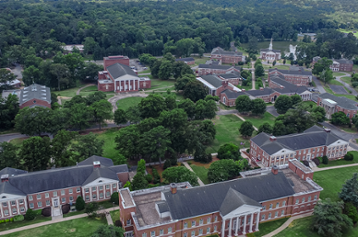
Tour our beautiful 200-acre campus featuring Georgian architecture, lush green spaces, recreational facilities, residence halls, and worship center.
Vist Wesleyan Virtually